
Three regional projects kicked off to develop learning communities within the hydrogen chain


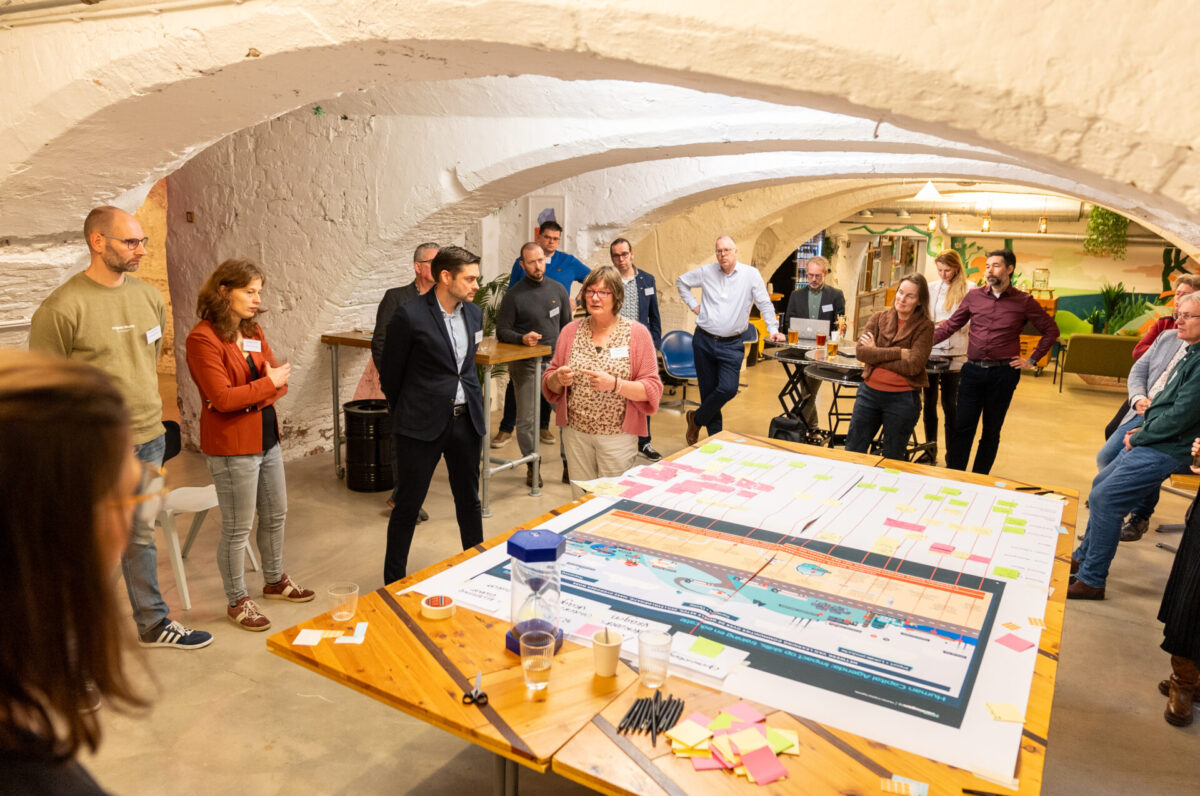
The projects focus on establishing and strengthening regional learning communities: collaborations in which industry partners, educational institutions, researchers and government bodies work together to build a responsive ecosystem for learning, working and innovating across the hydrogen chain.
Why investing in skills is essential for the hydrogen transition
The green hydrogen economy will require thousands of additional professionals in the coming years , spanning production, transport, storage and application. At the same time, the labour market is already under structural pressure, with a significant skills gap emerging.
To address these challenges, GroenvermogenNL developed a Human Capital Agenda (HCA) in 2021 together with stakeholders across the sector. Through this HCA programme, GroenvermogenNL supports ambitious hydrogen-chain initiatives by investing in talent development, education and knowledge infrastructure.
Regional ecosystems as engines for learning, working and innovating
Under the HCA, GroenvermogenNL is developing a nationwide network of learning communities, supported by regional liaisons who connect relevant partners within their regions.
Learning communities bring together companies, education and training institutions, researchers and public authorities to conduct practice-oriented research, co-develop curricula and stimulate innovation. This creates an adaptive ecosystem where knowledge development, skills formation and work practice reinforce one another. As a result, the time-to-job can be shortened, and the sector gains timely access to well-trained professionals, without pulling talent away from other sectors.
Regions develop their own solutions for a responsive ecosystem
With the award of these three projects, the participating regions can now further shape their own learning communities. In the spring, three additional regional projects will follow. Ultimately, six regions will develop tailored solutions that reflect local labour-market needs and industrial contexts.
These solutions may include new training programmes, hybrid learning environments linking education and practice, or upskilling and reskilling pathways for both existing workers and new entrants. By leveraging regional differences and strengths, a diverse set of approaches will emerge, all contributing to a future-proof hydrogen ecosystem.
Building a national network of learning communities
While the projects are regionally organised, collectively they form a crucial building block of a national responsive ecosystem for learning, working and innovating. The collaboration between regions enables broad knowledge sharing, replication of effective methods and scaling of successful approaches. In this way, the projects strengthen not only regional innovation capacity but also the national foundation for the green hydrogen transition.
Awarded projects
United Brains 4 Hydrogen
With a grant of € 2,885,496, the United Brains 4 Hydrogen project will investigate the development of a learning community for professional development within the hydrogen sector in the Brainport region. The overarching aim is to connect existing informal networks at different levels into one coherent whole in order to improve knowledge transfer, shorten onboarding processes and create a future-proof inflow of personnel. In a practice-oriented manner, participants work together on innovations. The project aligns with rapid technological developments and the growing demand for new knowledge and skills, with a strong focus on lifelong learning. Digital learning tools are used to improve the accessibility and safety of new training programmes.
The consortium consists of Eindhoven University of Technology, Fontys University of Applied Sciences, Power2Power, Avans University of Applied Sciences and World Class Maintenance.
H2LEARN
H2LEARN stands for Hydrogen & Human Capital for Learning, Education, Advancement, Research and Networking. The project creates a responsive and adaptive infrastructure, or ecosystem, for human capital in the North-West region by forming a robust and dynamic macro learning community. The main question is how an ecosystem can be co-designed and created to improve the educational offering and accelerate the development of human capital for green hydrogen. Research is conducted on learning communities at the macro level to promote the emergence and governance of the ecosystem, and at the micro level to facilitate transdisciplinary collaboration. To understand how collaborative processes unfold, a participatory action research study has been set up to observe activities and actions and to carry out interventions. H2LEARN will begin with a grant of € 4,449,327.
The consortium consists of Amsterdam University of Applied Sciences, Techport, Inholland University of Applied Sciences, ROC VonK, Elexel, University of Amsterdam, ROC Amsterdam Flevoland and On2Quest.
HyLEARN
The HyLEARN project (Enhancing regional responsiveness through agile skill formation in and across businesses and learning process innovation in the green Hydrogen Chain) focuses on the Northern region. HyLEARN receives a grant of € 4,342,597 and will use this to develop a responsive ecosystem for working, learning and innovating, where the development of knowledge and skills for (future) hydrogen professionals goes hand in hand with a shorter time-to-job. Organisations and companies face continuously changing requirements for their personnel and a shortage of available candidates. Understanding changing tasks is essential for developing a responsive job structure, recruitment and skills development. More effective training, including during work activities, reduces the time-to-job. With insights into learning journeys, targeted learning processes are developed. Regional responsiveness is increased through agile skills training within and between companies and through a learning-innovation ecosystem in the green hydrogen chain.
The HyLEARN consortium consists of Hanze University of Applied Sciences, DCTerra, NHL Stenden University of Applied Sciences, Noorderpoort College, University of Groningen, New Energy Coalition, Alfa College and Firda.
If you have any questions, please contact
Marsha Wagner
Programme Manager