
GVNL Perspective Online | Europe’s smart hydrogen hub


The key to becoming this smart hydrogen hub lies in infrastructure: the backbone that connects the entire hydrogen system. “Without pipelines, storage facilities and import infrastructure, companies cannot invest in production or usage. Large industrial clusters, as well as sectors such as ceramics, glass and cement – the so-called Cluster 6 companies – are waiting for a reliable hydrogen supply. For mobility applications, such as heavy transport, shipping and aviation, refuelling and bunkering facilities are also required before a transition can take place,” says Peters. “In short: first pipelines for transport and storage to ensure security of supply. Only then will the market and investments follow. Infrastructure always comes first.”
Every square centimetre has a purpose
However, developing this infrastructure in the Netherlands is complex. Peters emphasises that a shift in mindset is needed: “The Netherlands was one of the first countries in Europe to introduce a hydrogen strategy. In terms of plans and ambitions, we are leading. But we are less successful in implementation and in getting projects off the ground. Infrastructure projects are particularly challenging in a country like the Netherlands, where every square centimetre already has a designated use. This also applies to upgrading existing infrastructure. You have to go through lengthy permitting and public consultation procedures.” He points to neighbouring countries such as Germany, where governments take a more proactive role and incentivise frontrunners with financial benefits. This makes it far more attractive for industry to invest in infrastructure and production capacity.
Import ready by 2030
The Netherlands will need to import a large share of its green hydrogen by 2030. To support this, NLHydrogen, together with ports and industry associations, presented an updated Hydrogen Import Manifesto in spring 2025.
The manifesto calls for action per hydrogen carrier:
Ammonia:
Develop large-scale ammonia crackers in ports in a timely manner. Financial support is required through schemes such as SDE++ or OWE.
Liquid hydrogen (LH₂):
Invest in larger tankers, terminals and conversion capacity. Expand support schemes to ensure that scaling up becomes economically viable, and enable bulk transport via inland shipping.
Methanol:
Use green methanol as a feedstock for sustainable fuels and chemicals. Safeguard the market for e-methanol through quotas and financial instruments, particularly for sustainable aviation fuels (e-SAF).
LOHCs:
Update safety frameworks to ensure that transport and conversion can take place responsibly. Support technologies for the safe ‘loading’ and ‘unloading’ of hydrogen.
Plans under implementation
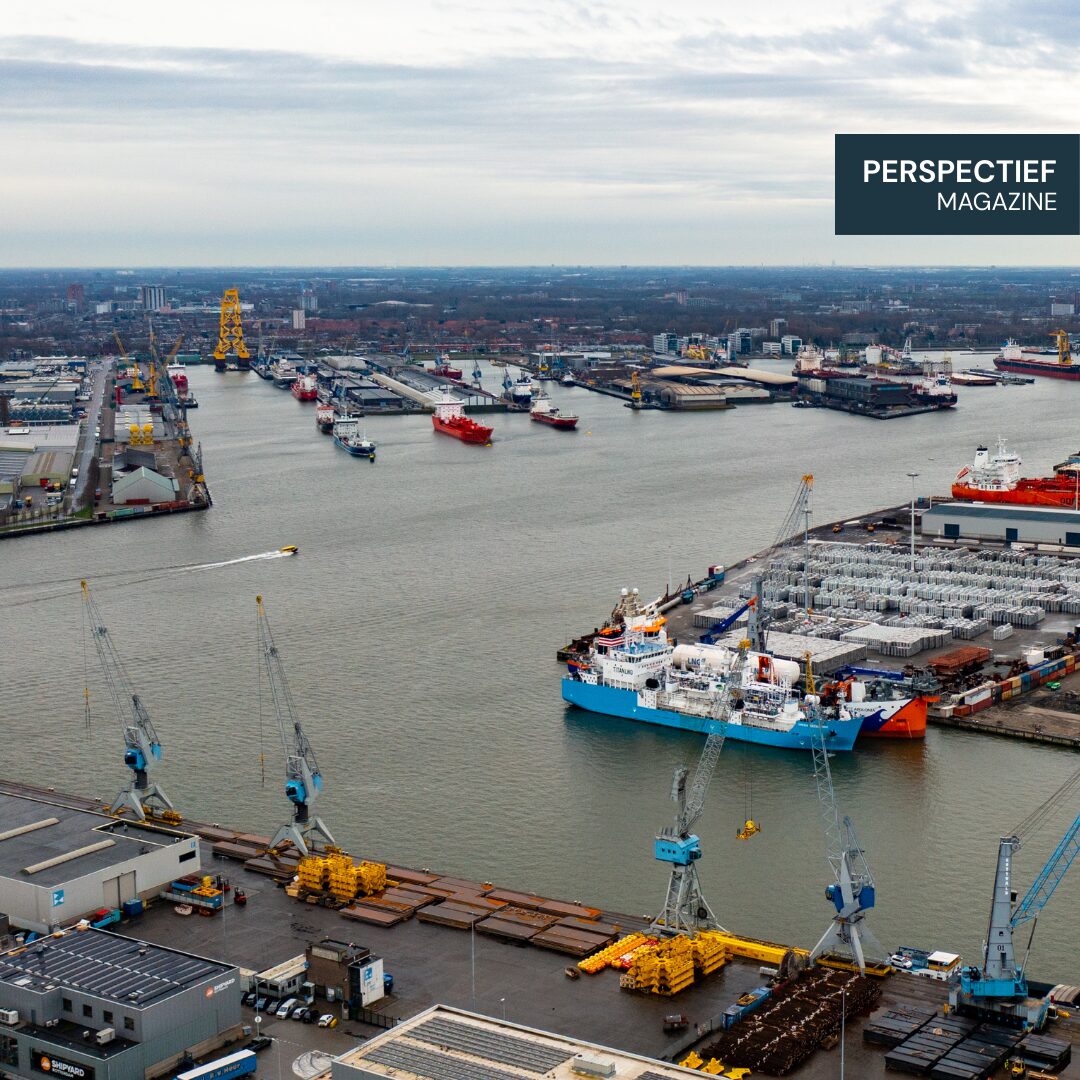
The Netherlands is already taking important steps in the field of transport, storage and import of green hydrogen. In Rotterdam, HyNetwork delivered the first 32 kilometres of the national hydrogen network in the summer of 2025. Shortly before that, the National Agenda for Underground Hydrogen Storage was published. A key component of this agenda is HyStock, an initiative by Gasunie. This is the first project aimed at providing the Netherlands with its own hydrogen reserves, supported by funding from the Climate Fund. HyStock is, among other things, exploring how four salt caverns owned by Gasunie can be used for green hydrogen storage from 2030 onwards. In addition, a pilot project is being considered to store hydrogen in a depleted gas field. As hydrogen presents different risks compared to natural gas, the government is working on clear regulatory frameworks and accelerated permitting procedures. Through these initiatives, the Dutch government aims to ensure that storage capacity is available before 2035, with the possibility of large-scale expansion thereafter. At the same time, extensive research is being conducted, including within the HyTROS programme of GroenvermogenNL.
HyTROS: knowledge for safe and rapid scale-up
HyTROS programme (Hydrogen Transport, Offshore and Storage) brings together expertise from universities, research institutes and industry to develop safe and efficient infrastructure. Since its launch in 2024, more than twenty PhD candidates and postdoctoral researchers have been working on both fundamental and applied questions related to onshore and offshore hydrogen infrastructure, large-scale storage, system integration and safety. This includes research into pipeline repurposing, monitoring, and minimising leakages and risks. René Peters is the project coordinator of HyTROS: “One of our objectives is to bring the safety of hydrogen infrastructure to the same level as that of natural gas,” says Peters. “We aim to reduce risks and ensure that hydrogen can be reliably imported, transported and stored. Storage in salt caverns is, for example, well-established, but storage in gas fields is new and has never been applied commercially before. HyTROS combines fundamental and applied research for this purpose, with industry providing samples and data from their own gas fields. For me, an ideal outcome would be to initiate a demonstration project for gas field storage before 2030. That would be globally unique.”
Policy on hydrogen storage, transport and import
In the Netherlands, policy on hydrogen storage focuses on large-scale underground capacity. According to the National Agenda for Underground Hydrogen Storage (2025), the first storage in salt caverns (HyStock in Groningen) is expected to start around 2031, followed at a later stage by the use of depleted gas fields. The objective is to have multiple storage facilities operational before 2035.
For transport, the Dutch government is working on the development of a national hydrogen network through HyNetwork Services, a subsidiary of Gasunie.
With regard to import, the government is pursuing an active energy diplomacy strategy aimed at securing a diversified supply of carriers and sources. In the Hydrogen Carriers Vision (2024), the government indicated that ammonia is expected to become the primary energy carrier in the early years, followed by methanol, liquid organic hydrogen carriers (LOHCs) and liquid hydrogen. Conversion and processing activities are expected to take place primarily in seaports.
The government provides subsidies from the Climate Fund for the use of renewable hydrogen in industry (demand-side subsidies) and mobility (SWiM), the development of electrolysis projects (IPCEI and OWE), import terminals (IPCEI), import volumes (H2Global), storage in salt caverns (HyStock), and the development of the national hydrogen transport network.
Finally, European obligations such as Renewable Energy Directive III and ReFuelEU Aviation are creating additional pressure on the market.
Breakthrough around 2030
The need for infrastructure is both significant and urgent. However, according to René Peters, it is not only about speed, but above all about timing: “The question is not so much when the infrastructure needs to be in place, but when the energy system is ready for large-scale green hydrogen.” He anticipates a breakthrough around 2030, when three-quarters of electricity production will be renewable and structural surpluses will become available. This will make green electricity – and therefore hydrogen – more affordable, and consequently more attractive for industry. By that time, the infrastructure must be in place.
The first salt cavern for storage (HyStock, Groningen) is planned for 2031, but several will be required before 2030 – and preparing such a cavern already takes five to seven years. The Delta Rhine Corridor has also been postponed to 2032. Peters: “That makes the timeline tight. Infrastructure projects take time, but once they are in place, they help pull the rest of the market forward. With HyTROS programme, we aim to contribute to the foundations of this infrastructure, so that by around 2030 we are as prepared as possible for green hydrogen.”
Hydrogen figures from Rotterdam
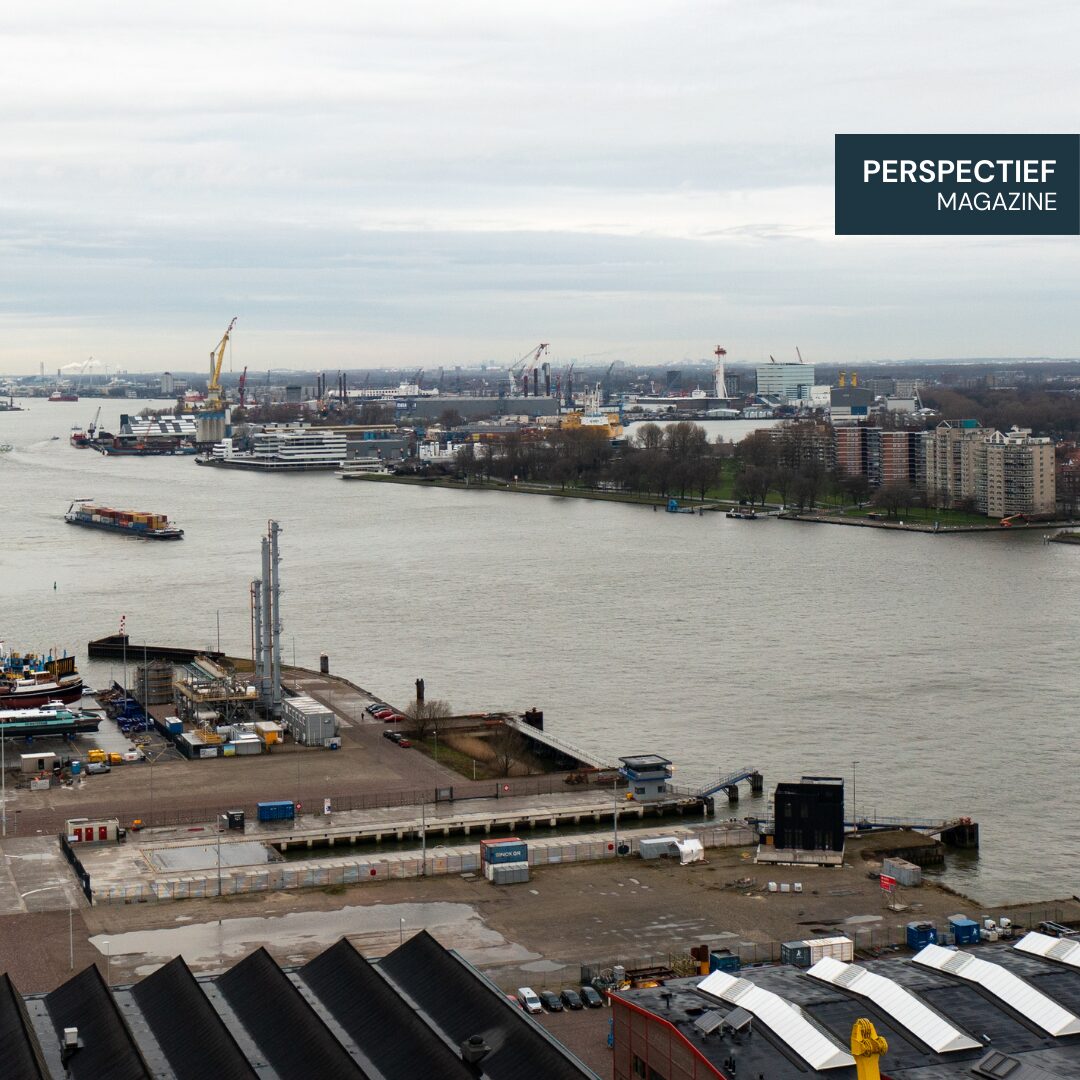
The Port of Rotterdam already processes approximately 0.5 million tonnes of hydrogen per year, the majority of which is grey hydrogen. By around 2030, between 1.2 and 2.6 million tonnes of hydrogen per year could be produced and imported. Looking ahead to 2050, the Port of Rotterdam expects that 2 million tonnes of local production and 18 million tonnes of imports and transit will be required to achieve a net-zero scenario.
To realise this, Rotterdam is focusing, among other things, on large-scale electrolysis and infrastructure. The Port of Rotterdam has reserved dedicated space for electrolysers that convert wind energy into green hydrogen. One example is Holland Hydrogen I (200 MW, 20 kilotonnes per year). Air Liquide is constructing the ELYgator (200 MW, 23 kilotonnes per year, expected to be operational by mid-2027). In addition, companies such as Eneco, Uniper, HyCC, RWE and Vattenfall / Copenhagen Infrastructure Partners have plans for hydrogen production in the Rotterdam port area. The ambition is to reach a total electrolysis capacity of 2.5 GW on the Maasvlakte by 2030, powered by offshore wind. In addition to so-called green hydrogen, the Port of Rotterdam is also focusing on low-carbon hydrogen to significantly reduce CO₂ emissions. Alongside local production, the port is investing in large-scale imports of sustainable hydrogen in various carriers, including ammonia, methanol, liquid hydrogen and LOHCs. Connecting all these projects is the hydrogen network developed by HyNetwork, which is expected to become operational in early 2026.
Randolf Weterings, Senior Programme Manager Hydrogen at the Port of Rotterdam:
“What makes me most proud is that the hydrogen system in the Port of Rotterdam is now truly being built and is visibly taking shape. Our goal is CO₂ reduction, in line with the Paris Agreement. The foundation of that system will come into operation in early 2026, when the first hydrogen flows from the Maasvlakte towards Pernis. To enable large-scale deployment of hydrogen in sectors such as steel, aviation and industry, many innovations are still required – from carriers to electrolysis and applications. But the foundations are now being laid.”

René Peters
Project Coordinator
This article was originally published in the GVNL Perspective magazine. With GVNL Perspective, we highlight how the hydrogen transition is evolving: from ambition to implementation. In this online series, we share articles from the first issue of GVNL Perspective, featuring expert insights, inspiring stories from pioneers, and examples of innovation that demonstrate how the Netherlands is gradually turning the promise of green hydrogen into reality—driven by a shared ambition to move forward.