


Sandra de Keijzer:
GVNL Perspective Online | A distinctive approach to the R&D programme: one call, one consortium, one project plan
The R&D programme of GroenvermogenNL follows a distinctive approach. In the calls, applicants are challenged to form a single consortium and work on one integrated project plan. Sandra de Keijzer, Head of Chemistry and Physics at The Dutch Research Council (NWO), and Paulien Herder, board member of GroenvermogenNL, explain the reasoning behind this choice.
What was the thinking behind this way of working?
Paulien Herder:
“The design of the R&D programme took place under time pressure. There was not yet a fully developed programme, and due to Covid we were unable to meet quickly to work on it. We therefore deliberately chose an approach in which the issues faced by industry and science would be elaborated further at a later stage: the so-called sandpit approach.”
Sandra de Keijzer:
“It was an exciting choice and relatively new for us at the time we were shaping GroenvermogenNL, but we knew that the sandpit approach had previously been applied successfully in England. With so-called framework workshops, where there is already a theme, we were able to bring parties together in an intensive process and let them arrive at proposals jointly.”
Why is the question from industry central?
Sandra de Keijzer:
“From the first workshops, we learned to let companies explain as early as possible where their interests and challenges lie. In that way, you work towards a proposal that immediately has a very solid foundation. Researchers can then start working on possible directions for solutions. We also applied that principle in the other workshops: first let industry speak.”
Paulien Herder:
“Traditionally, researchers start from their own curiosity: what do we find scientifically interesting? We are now turning that around. During the first day of the sandpit, companies are given the floor. They explain what their challenges are. Only after that do the scientists get to work: what knowledge can we develop to solve those issues?”
What do you think of the consortia that now exist?
Paulien Herder:
“Strong consortia have now emerged, made up of companies and knowledge institutions working together on an integrated programme. Our concern beforehand was how many companies would sign up, but that concern turned out to be unfounded. Industry and knowledge institutions did first have to get used to this new methodology, but they are largely very satisfied with the outcomes.”
Sandra de Keijzer:
“You have to make an effort to involve companies. Researchers and programme leaders of GroenvermogenNL actively approached them. The involvement of universities of applied sciences is a positive development. Because companies and universities of applied sciences can also receive funding within GroenvermogenNL, transdisciplinary and equal consortia have emerged. NWO has not previously funded companies, and this has been made possible specifically for GroenvermogenNL.”
What is the added value of broad consortia?
Sandra de Keijzer:
“From the outset, everyone is given the opportunity to contribute to discussions on what we should be doing in the Netherlands on a particular theme. You also create more room for out-of-the-box ideas and for unexpected partners to join. At the same time, we give consortia the flexibility to slightly adjust the original theme if needed, based on new ideas or current developments.”
Paulien Herder:
“We aim for an integrated programme. That cannot be achieved with more conventional calls in which researchers submit individual project proposals. By bringing people together in one room and asking them to develop ideas that fit together for a substantial budget, you do achieve that level of integration. I expect this will enable research to deliver impact more quickly.”
How does this approach fit within the overall GroenvermogenNL programme?
Paulien Herder:
“We see that companies participating in the R&D consortia are also involved in other subsidy schemes, for example to develop pilot projects or to contribute to our human capital agenda. For instance, by retraining employees through our Make Hydrogen Work programme to work with hydrogen. This is how the ecosystem we aim to build in the Netherlands takes shape.”
Sandra de Keijzer:
“With this way of working, we carefully safeguard quality and achieve greater impact. Ultimately, it is about stimulating innovation and economic activity. The quality assessment at the end of the workshop also includes an international panel, which is a very valuable addition. This helps prevent us from developing something in the Netherlands that is already standard practice in countries such as Germany or France.”
For which breakthrough may R&D project leaders wake you up at night?
How do the R&D calls work?
-
When a call opens, you register as an interested party as a company or knowledge institution.
-
You are required to participate in two workshops of 2.5 days each.
-
During the workshops, you jointly define the research question and direction for solutions.
-
You form one consortium to work on one integrated project proposal.
-
Following a positive evaluation, the project is carried out by the consortium
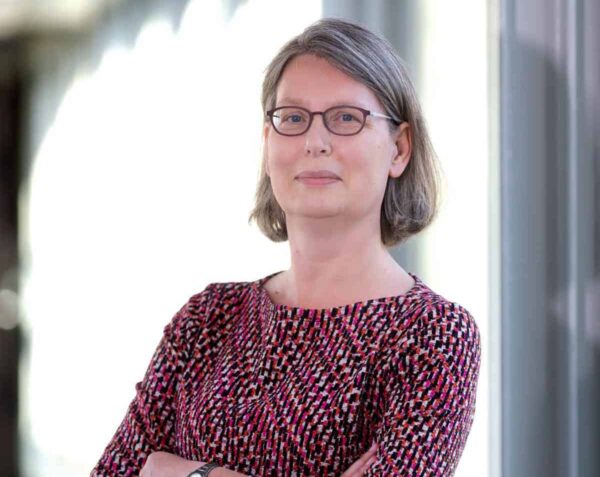
Prof.dr.ir. Paulien Herder
Programme Board
Dean of the Faculty of Applied Sciences, Delft University of Technology
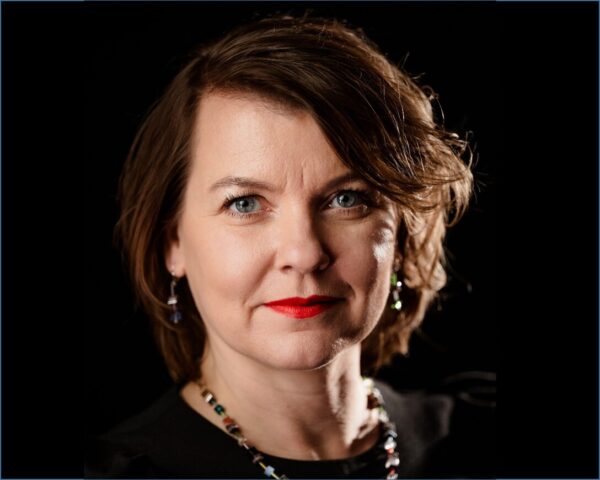
Sandra de Keijzer
NWO
Hoofd Chemie en Natuurkunde
This article was originally published in the GVNL Perspective magazine. With GVNL Perspective, we highlight how the hydrogen transition is evolving: from ambition to implementation. In this online series, we share articles from the first GVNL Perspective magazine, featuring expert insights, inspiring stories from pioneers, and examples of innovation that demonstrate how the Netherlands is gradually turning the promise of green hydrogen into reality—driven by a shared ambition to move forward.