
Kick-off of HyCARB. “Unique project to make chemistry more sustainable”


GroenvermogenNL is implementing an R&D programme to bring together the expertise of knowledge institutions and companies to accelerate and scale up the production and use of green hydrogen. An important part of the programme focuses on making the chemical industry more sustainable, such as the HyCARB project.
Sustainable and cost-efficient
“With HyCARB, we want to help make the chemical industry more sustainable and circular,” says general project coordinator Martijn de Graaff of TNO. “This is important for reducing greenhouse gas emissions. In addition, the chemical sector is of great value to the Dutch economy. With HyCARB, we are investigating innovations that are both sustainable and cost-efficient, so that the Dutch chemical industry remains competitive not only in Europe, but also globally.”
Need for sustainability
HyCARB focuses specifically on carbon-based chemicals. Such products are everywhere in our daily lives. Think of plastics, fuels, household items such as paint and detergents, but also chemical building blocks for further processing in industry. Global demand for these products is expected to double by 2050. The problem is that they are currently still made from fossil raw materials, which leads to high CO2 emissions.
Unique project
“To replace fossil raw materials, we are investigating technological applications based on green electrons and green hydrogen,” says technical project coordinator Bert Weckhuysen of Utrecht University. “It is unique in the world that we are investigating and comparing different routes for thermal and electrochemical conversion of CO₂ within one large project.”
Broad consortium
Due to the broad scope of HyCARB, 45 parties are working together. The consortium consists of 17 knowledge organisations and 28 companies, including start-ups, SMEs and multinationals. GroenvermogenNL is supporting the project together with NWO with a subsidy of more than €35 million. The project partners are investing €10 million.
Various lines of research
In close consultation with industry, the project focuses on specific technologies and products. HyCARB has a number of lines of research for this purpose. The first line of research is to convert CO2 into fuels and platform chemicals using green hydrogen, resulting in synthesis gas, a mixture of hydrogen and carbon monoxide, and other products such as aviation fuel (SAF), polymers (from olefines) and methanol. The second line of research focuses on electrochemical conversion processes to produce ethylene and oxalic acid, among other things. The third line of research concerns the use of electrons to heat chemical conversion processes. The fourth line of research seeks smart, efficient combinations of the technologies from the first three lines of research.
Towards new technologies
The next five years will be an exciting time for the HyCARB consortium. It is working towards innovative, sustainable technologies that are efficient, flexible and robust. But what these will be and what new catalysts will look like, for example, remains to be seen. “An important challenge is how we deal with renewable energy, such as solar energy,” says Marta Costa Figueiredo, who is also technical project coordinator and works at Eindhoven University of Technology. “This is an intermittent energy source, which is difficult for large-scale chemical processes. We will carefully analyse the degradation and stability of prototypes and test models.”
Kick-off 11 March
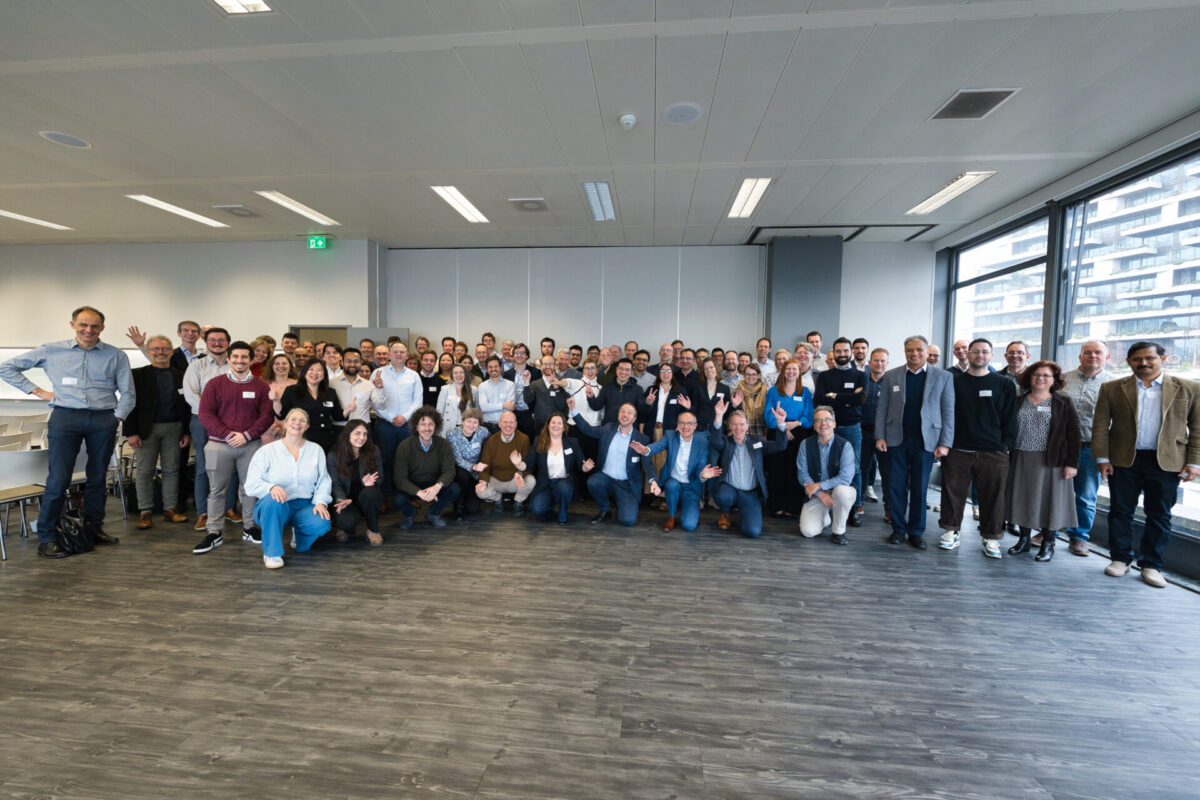
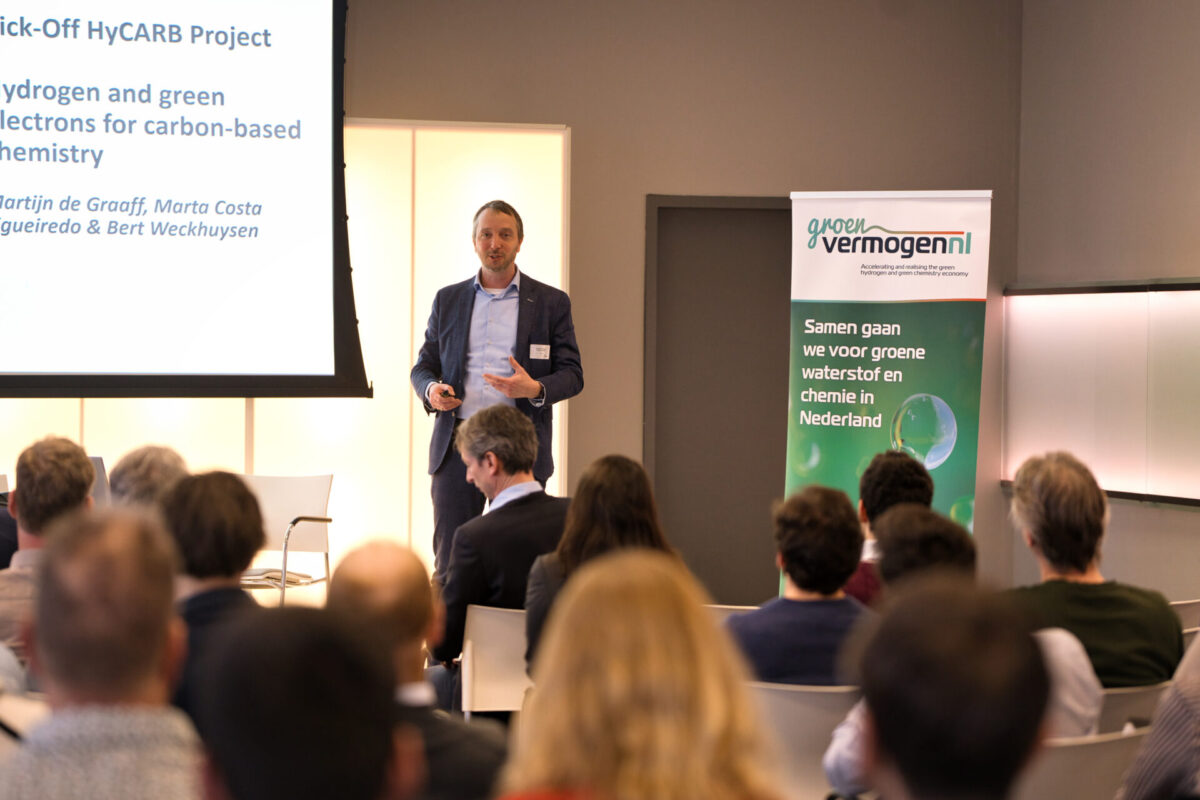
HyCARB stands or falls on good cooperation between those involved from knowledge institutions and companies within the research lines and between the research lines, if only to compare the different technologies with each other. “The kick-off on 11 March in Utrecht is the first important step in mutual cooperation,” says De Graaff. “It involves more than 100 people getting to know each other better.” The scale of the project and the involvement of the entire value chain is very special, he emphasises. “This will enable us to make an impact and we hope to develop technologies that will not only make chemistry more sustainable in the Netherlands, but also enable companies to export their knowledge worldwide.”
Next generation
The two technical project coordinators are also enthusiastic. “It’s great to apply research and work with companies to solve sustainability issues in practice,” says Costa Figueiredo. Weckhuysen adds: “An important part of HyCARB is that we are training the next generation to further develop the new technologies. Green chemistry is their future.”
Want to know more about the research?
HyCARB’s research will continue until 2029. Curious about the research theme? Read more about this R&D programme component.
If you have questions about HyCARB, please contact
Carol Xiao
Programme Manager
