
GVNL Perspective Online | Towards an open innovation centre for electrolysers


Towards an open innovation centre for electrolysers
The Netherlands has a range of test facilities for electrolysis, from small scale laboratories to megawatt test centres. To move towards broad application, stronger connections between these facilities are needed. “If you want to bring innovation to market quickly, you need a complete test infrastructure. Not only the hardware and the laboratories, but also knowledge sharing and clear agreements on how testing is conducted.”
GroenvermogenNL and TNO are joining forces to establish these connections within an open innovation centre for electrolysers. In early spring 2025, TNO and GroenvermogenNL signed a collaboration agreement for a multi year programme to realise this initiative. Arend de Groot, Senior Consultant at TNO and project coordinator of the GroenvermogenNL programme HyPRO, summarises it simply: “You want to know what you are going to test, where you can test, and how you should test.”
Community of Practice Electrolysis
The joint programme centres on a test infrastructure that clearly maps available facilities, enables collective learning without requiring the sharing of sensitive data, and establishes test protocols and standards. De Groot explains: “We are first mapping which test systems we have in the Netherlands. We focus on water electrolysis and low temperature electrolysis. Product development in these areas is progressing rapidly, and we are ready to scale up this technology.
We want to ensure that parties at every stage of their development roadmap have access to the appropriate facility.” The objective is to create a coordinated and accessible network of test locations where companies understand which test facility best matches their needs based on scale, use case and equipment type. This will accelerate validation and scaling of new technologies. In addition, standardisation can be achieved across testing types and test locations, making results more reliable, easier to translate to larger scale, and reducing costs. A Community of Practice Electrolysis (COPE) has now been established, in which researchers, companies and suppliers jointly work on strengthening the test infrastructure.
The missing link
In total, there are approximately ten test facilities in the Netherlands. There are strong laboratories for materials and component research, as well as several test centres at megawatt level. For example, the Hydrohub Megawatt Test Center in Groningen is designed for full system and stack testing up to 250 kW PEM and 250 kW AWE. The Faraday Lab in Petten focuses on testing components, cells and short stacks up to 50 kW.
Universities and companies also operate their own test facilities. However, at the higher Technology Readiness Levels, significant gaps remain, particularly with regard to long term durability testing and large scale demonstrations. Shell, TNO, GroenvermogenNL and DNV are working on the development of a durability testing facility for electrolysers in Emmen. This facility will focus on long term testing of equipment for the production of green hydrogen using electrolysis systems between 1 and 10 MW. Such durability testing completes the final phase of innovation, corresponding to Technology Readiness Levels 7 to 9.
Learning faster together
In addition to infrastructure, knowledge sharing plays a major role. Research results are often kept within projects or companies. Universities and research institutions publish part of their findings, but companies frequently protect their data for competitive reasons. Without shared learning experiences, it takes longer to correct errors and improve technology. Duplication of work and fragmentation are real risks. “It is not so much about the data itself, but about the interpretation,” De Groot explains. “Which insights are relevant for the entire community? For that, you do not need to share all raw data.”
To overcome concerns around data sharing, TNO and GroenvermogenNL are working on a so called Electrolyser Intelligence Platform, an expert system in which data analysis and machine learning accelerate the collective learning curve. The idea is that collective patterns are derived from large volumes of measurements, such as learning curves for cost and performance. This creates a more reliable understanding of where the technology stands and what the next step should be.
Research in HyPRO
The Netherlands has considerable knowledge and testing capacity for electrolysis, but these are not always well aligned. As a result, it is difficult to compare results or translate them into certification. De Groot: “How do we ensure that we work simultaneously according to the same standards and protocols? We currently do not have a clear route for testing. We are investigating this, among other things, within the GroenvermogenNL programme HyPRO. In our research on PEM electrolysis, we conduct the same tests in different laboratories to determine whether we are actually measuring the same outcomes. Benchmarking the hardware is an important starting point. After that, standards must be developed for test procedures. With the open innovation centre, we will make that route more concrete.”
Standardisation
Standardisation is not only a technical issue, but affects the entire value chain. “An end user must specify how the electrolyser will be deployed,” says De Groot. “The supplier must be able to provide guarantees and optimise the design accordingly. Researchers must understand which requirements are relevant to their experiments. This dialogue must take place structurally, with close proximity between industry and PhD researchers.” Good alignment accelerates deployment and prevents overengineering, while standardisation stimulates certification and mass production. Both factors contribute to a rapid reduction in the cost of green hydrogen. Here, the open innovation centre has an important role. By developing clear protocols and benchmarks, it becomes possible to certify more quickly and more reliably. This strengthens market confidence and accelerates scaling.
Towards a mature ecosystem
The ultimate goal is clear: a coherent ecosystem of test facilities in which companies, knowledge institutions and suppliers connect and reinforce one another to bring new technologies to market and further develop existing technologies. This includes a clear route for scaling, from small laboratory experiments to industrial durability testing, as well as an infrastructure for accelerated collective learning and standardisation.
“We are working towards a fully fledged open innovation centre,” De Groot concludes. “With access for all relevant parties, clear protocols and the opportunity to learn collectively. By mid 2026, we expect the first part, the one stop shop customer journey, to be ready. This will provide companies with a clear route to the appropriate testing facility.”
“You want to know what you are going to test, where you can test and how you should test.”
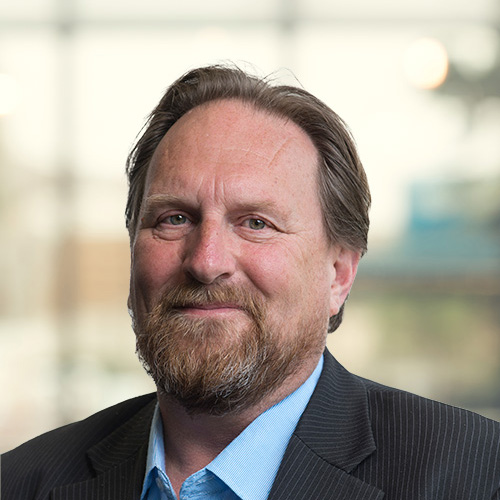
Arend de Groot
Project Coordinator