
Two new hydrogen projects strengthen national network of learning communities


Accelerating the green hydrogen transition requires increased investment, innovation and scale-up. This will demand nearly 38,000 well-trained professionals. Due to persistent labour market shortages and a significant skills gap, job growth remains uncertain. In response, GroenvermogenNL, together with a wide range of stakeholders, developed a Human Capital Agenda (HCA) in 2021 to address these challenges. This programme acts as an enabler for ambitious activities in hydrogen production, transport, storage and distribution, as well as its large-scale application in industry and other sectors such as mobility, transport and the built environment.
Regional learning communities
A central pillar within the HCA is the development of regional learning communities: collaborations in which companies, educational institutions, researchers and public authorities jointly build a responsive ecosystem for learning, working and innovation within the hydrogen value chain. Within these ecosystems, applied research, education and innovation are closely integrated. Knowledge development and skills acquisition go hand in hand, shortening the pathway to the labour market and ensuring the timely availability of well-trained professionals, without placing additional pressure on other sectors.
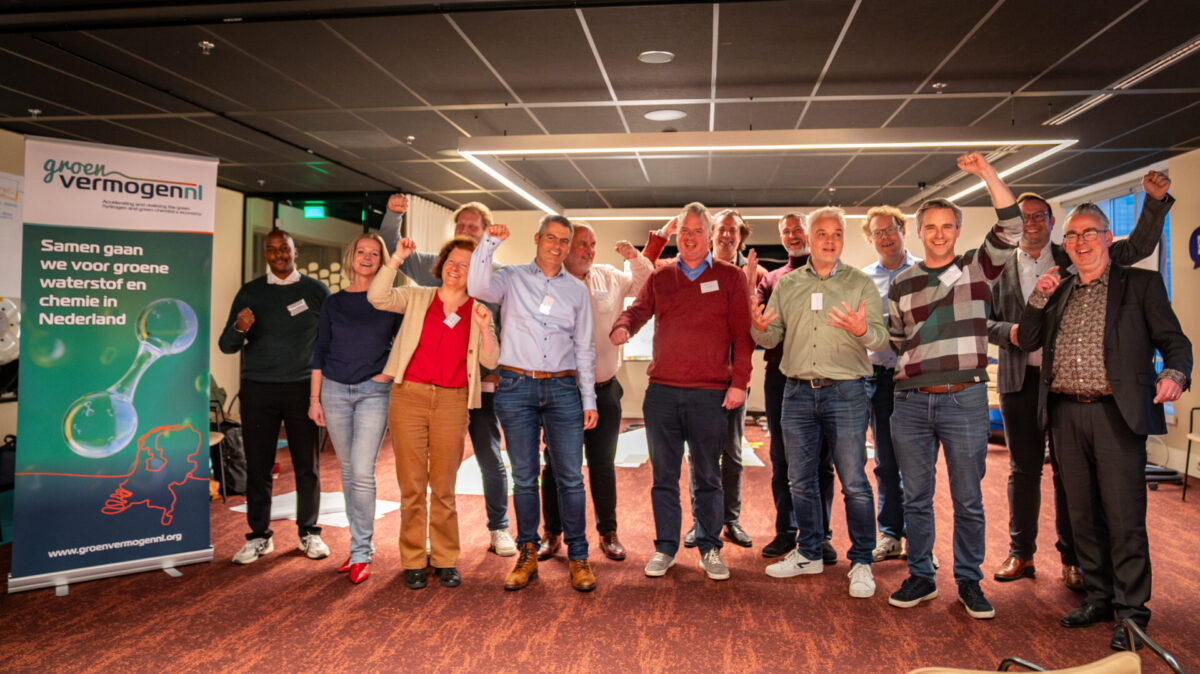
Within GroenvermogenNL, a national network of these learning communities is being developed, supported by regional liaisons who connect stakeholders and stimulate collaboration. At the same time, regions develop their own approaches, tailored to their specific labour market and industrial context. This results in a wide range of solutions, including hybrid learning environments that combine education and practice, new learning and development programmes, and targeted upskilling and reskilling pathways for both new entrants and existing workers.
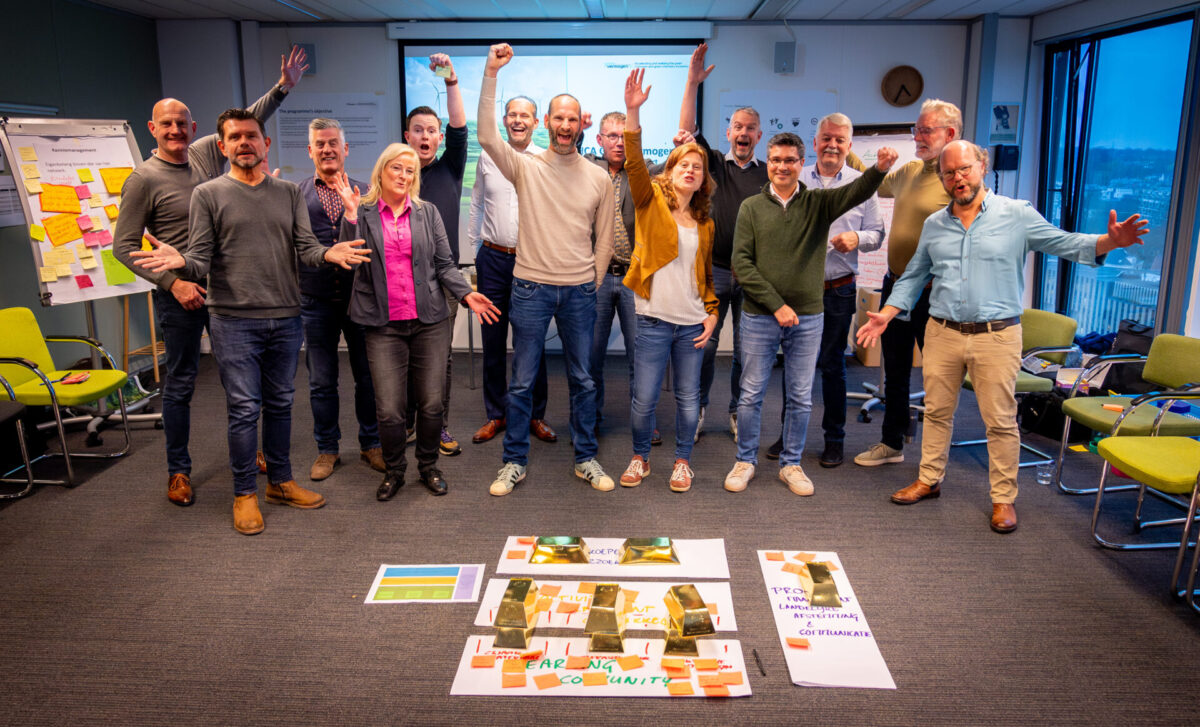
One national, responsive ecosystem
While implementation takes place at the regional level, these initiatives together form one national, responsive ecosystem. By sharing and scaling knowledge, experiences and successful approaches across regions, they strengthen not only regional development but also the national foundation for a future-proof hydrogen economy.
By the end of 2025, three projects had already been awarded funding under this call: United Brains 4 Hydrogen (Brainport region), H2LEARN (North West Netherlands) and HyLEARN (Northern Netherlands). Two additional projects have now been funded: H2Life (Lifeport region) and HELIX-West (Western Netherlands).
Two new projects: H2Life and HELIX-West
H2Life
H2Life has been awarded €4,409,440 in subsidy. The project explores the development of a learning community for professional development within the hydrogen sector across the Brainport region. Its overarching objective is to connect existing informal networks at different levels into one coherent system, improving knowledge transfer, shortening onboarding processes and creating a future-proof workforce pipeline. Participants collaborate on innovations in a practice-oriented setting. The project responds to rapid technological developments and the growing demand for new knowledge and skills, with a strong focus on lifelong learning. Digital learning tools are deployed to improve accessibility and safety of training programmes. The consortium includes Saxion University of Applied Sciences, Techniek Fabriek, University of Twente, Economic Board Arnhem Nijmegen, HAN University of Applied Sciences, ROVC, Bananaa communication for change, Aventus, Alles over waterstof, ROC Nijmegen, NIPV, Hyster-Yale, Integatr and On2Quest.
Hydrogen Education and Learning Innovation eXchange for region West-Nederland (HELIX-West)
Hydrogen Education and Learning Innovation eXchange for the West Netherlands region (HELIX-West) focuses on strengthening the skills base for the green hydrogen sector. Green hydrogen is essential for the energy transition and reducing CO₂ emissions. In the western Netherlands, multiple experimental environments are active. Within HELIX-West, universities, universities of applied sciences and vocational education institutions collaborate with four locations: The Green Village (TU Delft), RDM Campus, Merwe4Havens and the Duurzaamheidsfabriek. Despite these initiatives, there is still limited insight into the required skills and workforce for the green hydrogen sector. The project brings together and shares knowledge through transdisciplinary learning communities and a shared learning infrastructure. This action-based research supports the development of the labour market, skills and education for a sustainable hydrogen future. HELIX-West has been awarded €4,449,209 in subsidy. The consortium includes The Hague University of Applied Sciences, Rotterdam University of Applied Sciences, Erasmus University Rotterdam, TU Delft and Da Vinci College. Platform Zero and Bureau Veritas act as co-financiers.
More information?
Please contact:
Marsha Wagner
Programme Manager

Saskia Verstege
Project Coordinator