
GVNL Perspectief Online | Learning from hydrogen hubs


What is a hydrogen hub?
A hydrogen hub is a complex energy hub in which hydrogen plays a central role. Businesses located close to one another and aiming to become more sustainable work together within this system. A hydrogen hub forms a local energy chain, in which energy moves through the entire process from source to end user. Energy generation, transport, storage and the use of energy and hydrogen are therefore closely connected. Businesses from different sectors can come together within a hydrogen hub, including industry, mobility and transport, agriculture and horticulture, water authorities and construction. Combining sectors helps create balance within the hydrogen hub.
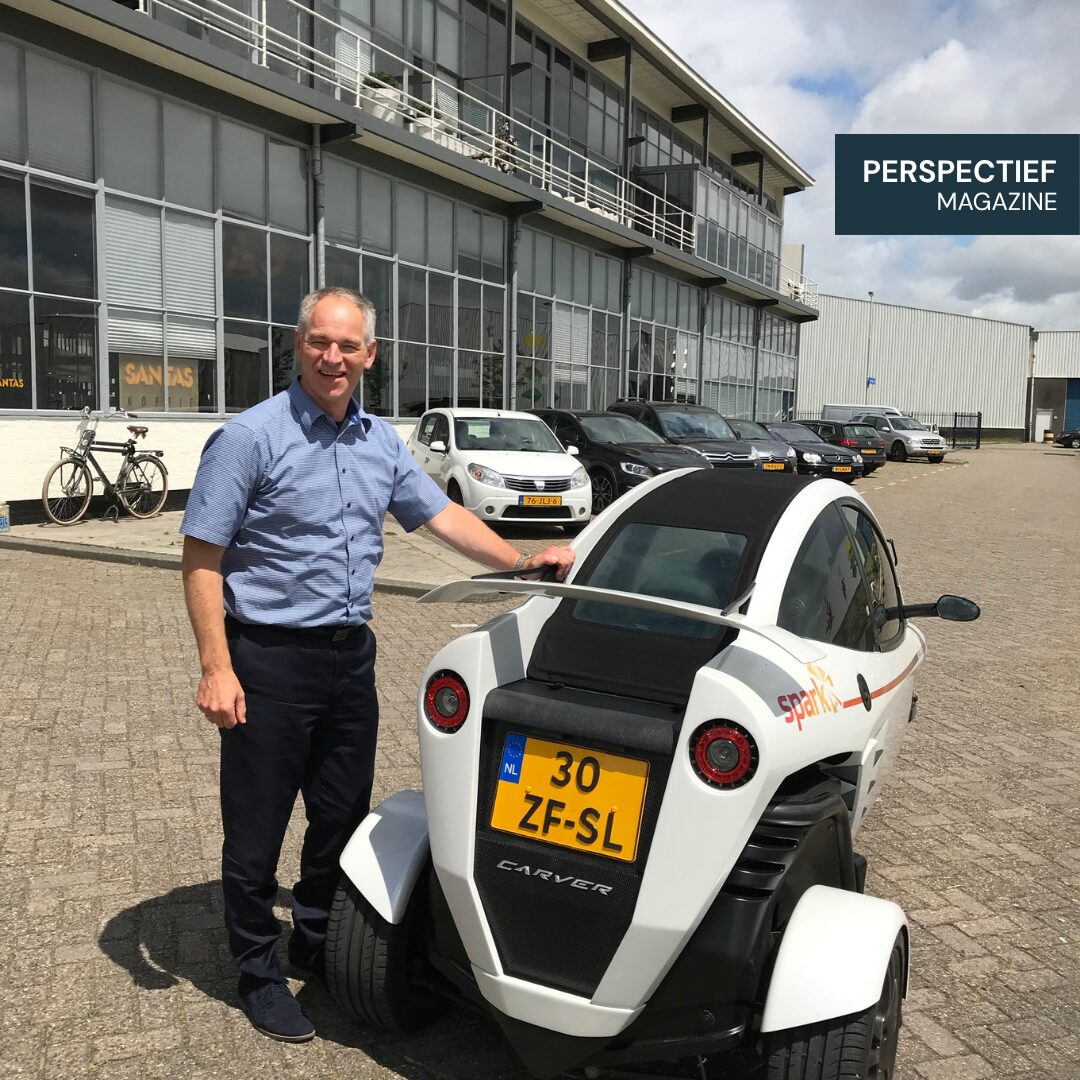
André Boer worked for KROHNE in Dordrecht for more than 40 years, a major German manufacturer of industrial measuring equipment. “It often brought me to Germany, where I noticed something striking: Germany is taking hydrogen seriously. Hydrogen refuelling stations are appearing in more and more places.” On his drive back to the Netherlands, he began to wonder: where can I actually refuel with hydrogen in our own country?
Boer did not leave the question unanswered. With his entrepreneurial mindset, he brought together various parties in the Drechtsteden region: users on one side, including public transport, logistics and maritime companies, and hydrogen producers on the other. “The refuelling station is now there,” says Boer.
Hydrogen hub in Sliedrecht
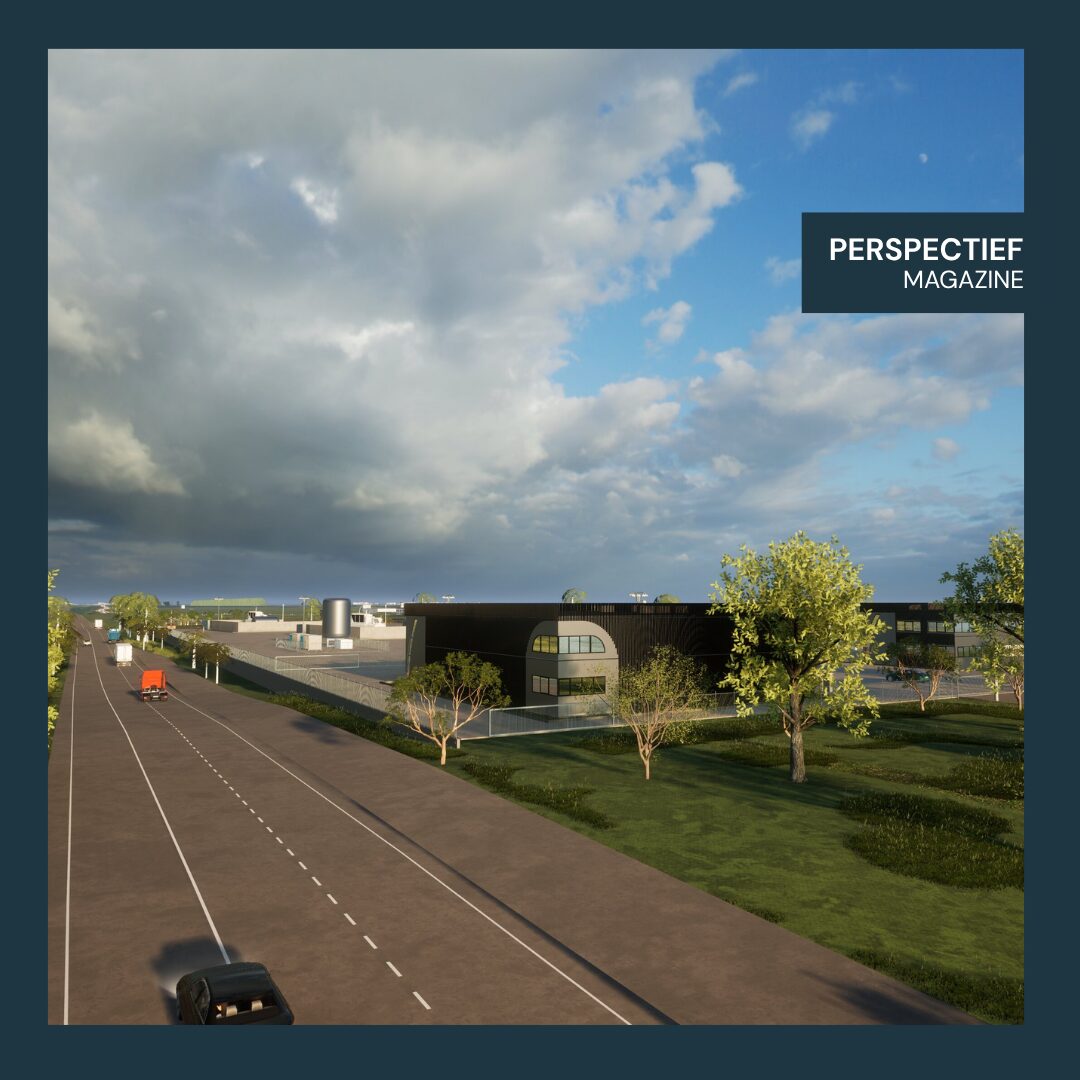
The rapid realisation of the refuelling station soon sparked ambitions for more. Before long, the municipality of Sliedrecht approached Boer. “North of the A15, a large area of land has been designated for a hydrogen hub,” says Boer. “The location is ideal. Next to it is a solar park that cannot always feed all of its energy into the grid. And there are plenty of potential users nearby, such as major food manufacturers, a forge and many SME companies.”
This marked the beginning of the idea for the H2Hub in Sliedrecht. To support its development, Boer established the Hydrogen Innovation Table as a board member of the employers’ association Werkgevers Drechtsteden. The initiative brings together not only companies from across the hydrogen value chain, but also governments and educational institutions. The plans for the hydrogen hub gradually took shape. “Grid operator Stedin joined to help guarantee a continuous supply of green electricity through an electricity substation,” Boer explains. “The residual heat from hydrogen production can be supplied to the regional heat network. Oxygen, another by product, can be delivered to the local water treatment facility.” The H2Hub also collaborates with HyCollege to help ensure there are enough well trained professionals for the hydrogen sector. HyCollege connects education, research, government, professionals and businesses, and shares knowledge through events, lectures and workshops. It also safeguards the quality of knowledge, skills and learning outcomes, while contributing to a consistent and comparable educational offering.
Research and initial design
Het onderzoek toonde de haalbaarheid van de H2Hub aan. “Maar de businesscase is geen verdienmodel”, verduidelijkt Boer. “Daar gaat het ons ook niet om. We willen verduurzamen en kennis opbouwen over waterstofhubs zodat we die zo efficiënt mogelijk kunnen maken. Onze ambitie is om meerdere hubs te bouwen. Hiermee leveren we een bijdrage aan de energietransitie, bieden we een oplossing voor netcongestie en stimuleren we duurzame economische groei in onze regio door onszelf van energie te voorzien.”
De Innovatietafel Waterstof heeft inmiddels de volgende stap gezet: een pre-FEED-studie (preliminary Front End Engineering Design). “Nog dit jaar willen we dit conceptuele ontwerp afronden”, zegt Boer. “Met steun van GroenvermogenNL (regeling TSE Industrie studies: waterstof en groene chemie, red.). Daarna volgt de engineering in detail, waaruit we de definitieve investeringsbeslissing zullen maken. Het zal om projectkosten van tientallen miljoenen euro’s gaan, waarvoor we een aanvraag voor de OWE-SEH regeling (Opschaling volledig hernieuwbare waterstofproductie via elektrolyse, red.) voorbereiden, private investeerders zoeken en een bancaire lening willen afsluiten.”
The plans for the hydrogen hub sound promising, but how realistic are they? “We wanted our internal calculations on the technical and financial feasibility to be independently verified,” says Boer. “That is why we asked an engineering firm from Rotterdam, specialised in green technologies, to carry out a preliminary feasibility study. This was partly funded through a regional subsidy and partly by the parties involved in the Hydrogen Innovation Table.”
The study confirmed the feasibility of the H2Hub. “But the business case is not intended as a profit model,” Boer explains. “That is not our goal. We want to accelerate sustainability and build knowledge about hydrogen hubs so that we can make them as efficient as possible. Our ambition is to develop multiple hubs. In doing so, we contribute to the energy transition, help address grid congestion and stimulate sustainable economic growth in our region by providing our own energy.”
The Hydrogen Innovation Table has since taken the next step: a pre FEED study (preliminary Front End Engineering Design). “We aim to complete this conceptual design later this year,” says Boer. “With support from GroenvermogenNL through the TSE Industry Studies scheme for hydrogen and green chemistry. This will be followed by detailed engineering, which will form the basis for the final investment decision.” The project is expected to involve investment costs amounting to tens of millions of euros. To finance this, preparations are underway for an application to the OWE SEH scheme (Scaling up fully renewable hydrogen production through electrolysis), alongside the search for private investors and bank financing.
Cooperative model for construction and operation
To build and operate the H2Hub, the Hydrogen Innovation Table is establishing a cooperative structure. “The advantage is that participating users and producers commit to both supplying and purchasing hydrogen,” says Boer. “Educational institutions and government bodies are also stakeholders. It creates a shared sense of ownership in which we recognise that the hub belongs to all of us and that we jointly take responsibility for a sustainable energy future.”
Despite this positive outlook and broad support, several challenges still remain. “I am thinking, for example, of national regulations stating that we may only operate on fully renewable electricity, while sufficient supply remains uncertain. Another important factor is the energy price, which accounts for roughly 50% of the production cost of green hydrogen.” Boer is less concerned about permits. “There is tremendous support from regional authorities. And we are working with a group of people who are not easily discouraged. I have great respect for the courage shown by all parties involved.”
New funding scheme for hydrogen hubs
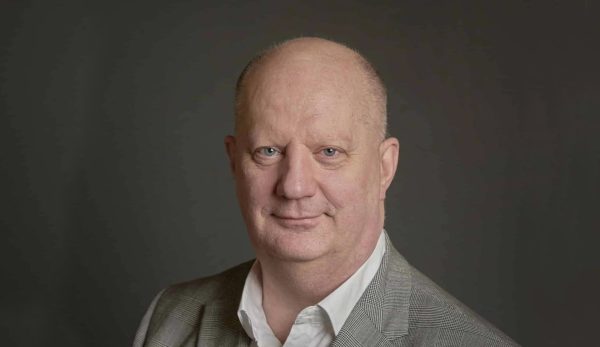
The experiences gained through the H2Hub in Sliedrecht align with broader national developments. RVO and GroenvermogenNL are working on a new support scheme for hydrogen hubs. Ed Buddenbaum, senior programme manager at GroenvermogenNL, explains the aim of the scheme: “GroenvermogenNL invests in large scale hydrogen projects. But we also want to learn from smaller scale up projects. How do you develop them, how do you finance them, what permitting challenges do you encounter and how do you deal with maintenance? Within the OWE scheme, smaller projects had less chance of receiving support. That is why, together with RVO, we are preparing a new scheme focused on hydrogen hubs, which we hope to open in January 2026.” The hydrogen hub scheme is intended to stimulate local initiatives and accelerate knowledge development.
Fenna van de Watering, hydrogen industry advisor at RVO: “RVO recognises the value of hydrogen hubs as an important part of local energy systems.
Hydrogen hubs provide local energy solutions and create societal benefits. RVO advises, supports and encourages entrepreneurs and regional authorities that want to develop and realise a hydrogen hub.
For example, we contribute ideas for technical solutions, organise networking and knowledge events, help identify consortium partners and assess subsidy applications.”


For more information
about hydrogen hubs, visit the RVO website or contact:
Ed Buddenbaum
Senior Programme Manager
This article was published in GVNL Perspectief magazine. Through GVNL Perspectief, we highlight how the hydrogen transition is developing from ambition to implementation. In this online series, we share articles from the first edition of GVNL Perspectief magazine, featuring insights from experts, inspiring stories from pioneers and examples of innovation that demonstrate how the Netherlands is steadily turning the promise of green hydrogen into reality, driven by a shared ambition to move forward.