
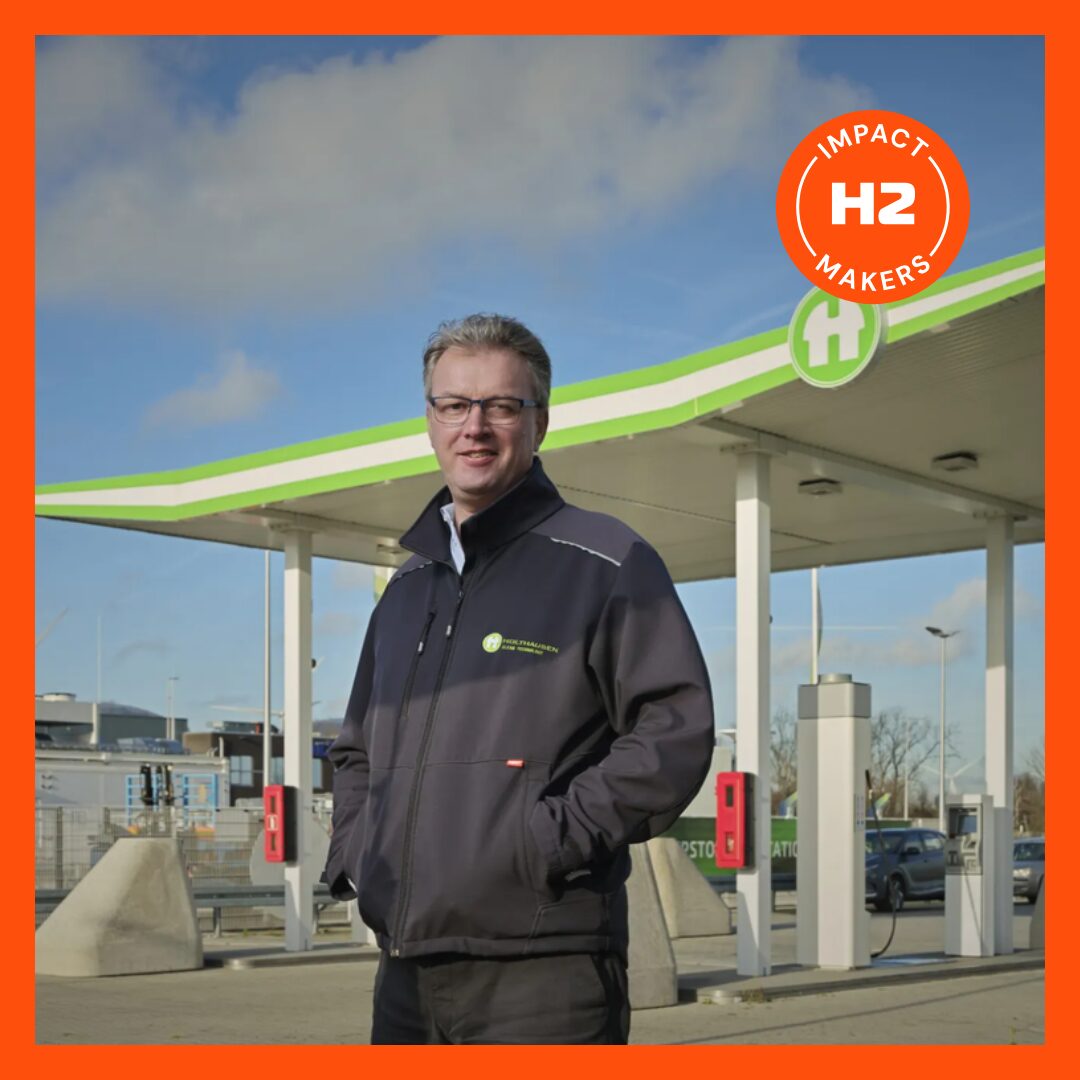
H2 Impactmakers: Aldwin Oechies, Operations Manager at Holthausen Energy Points


What inspired you to start working on this hydrogen project, and what motivates you to keep going?
“Holthausen has been active in the gas industry for 80 years. We are an innovative, hands-on company and are successfully making the transition to clean energy. In June, Holthausen Clean Technologies won the 2026 Front Runner Award from Nederland Waterstofland, a collaboration between major players across the hydrogen value chain. Energy Points is the business unit focused on developing green hydrogen production and refuelling stations. To support this, we have developed our own electrolysers. Using renewable electricity that would otherwise go unused, we produce hydrogen for mobility and industry. Our stations, each with 7 MW of electrolysis capacity, are located in Groningen and Amsterdam, and more recently in Oosterwolde as well. I feel at home in this company because I believe in zero-emission solutions that convert green energy into hydrogen. The opportunity to turn an emerging market into something significant is what motivates me.”
What challenges have you encountered while implementing this project, and how did you overcome them?
“Developing electrolysis systems means pioneering. You take three steps forward, then two steps back. As a frontrunner, you are the first to encounter and overcome obstacles that are still unfamiliar. And these challenges are not limited to technology. We have also had to deal with declining political attention for the energy transition. From a commercial perspective, we first had to overcome scepticism and demonstrate that we can genuinely supply certified green hydrogen. We were also among the first to work with authorities on hydrogen-related approvals and permits, including the Dutch Emissions Authority and regional environmental authorities. These developments are new territory for them as well.”
What do you consider to be the project’s greatest contribution to the transition towards a sustainable hydrogen economy?
“Through our role as a frontrunner, we have helped create local hydrogen ecosystems. We took the initiative to produce hydrogen, enabling other parties to come on board as users and ultimately helping to build a wider network, for example in the Port of Amsterdam. We have also demonstrated that our technology works and complies with relevant laws and regulations. This helps build confidence among stakeholders, including regional safety authorities.”
What support or collaboration has played a crucial role in the success of your project?
“An important factor was the Municipality of Groningen’s decision to invest in zero-emission transport. In addition to battery-electric solutions, the municipality opted for green hydrogen. With the financial support of this reliable partner, we were able to develop our first hydrogen refuelling station and contribute to the development of several vehicles. We also made grateful use of subsidies provided through RVO schemes, such as the Demonstration of Climate Technologies and Innovations in Transport (DKTI-transport) scheme and the Subsidy Scheme for Large-scale Production of Fully Renewable Hydrogen via Electrolysis (OWE).”